 PDF ebook
Boundaries & self-respect
Boundaries With Love
Albert KwaimiCare deeply without offering unlimited access.
 PDF ebook
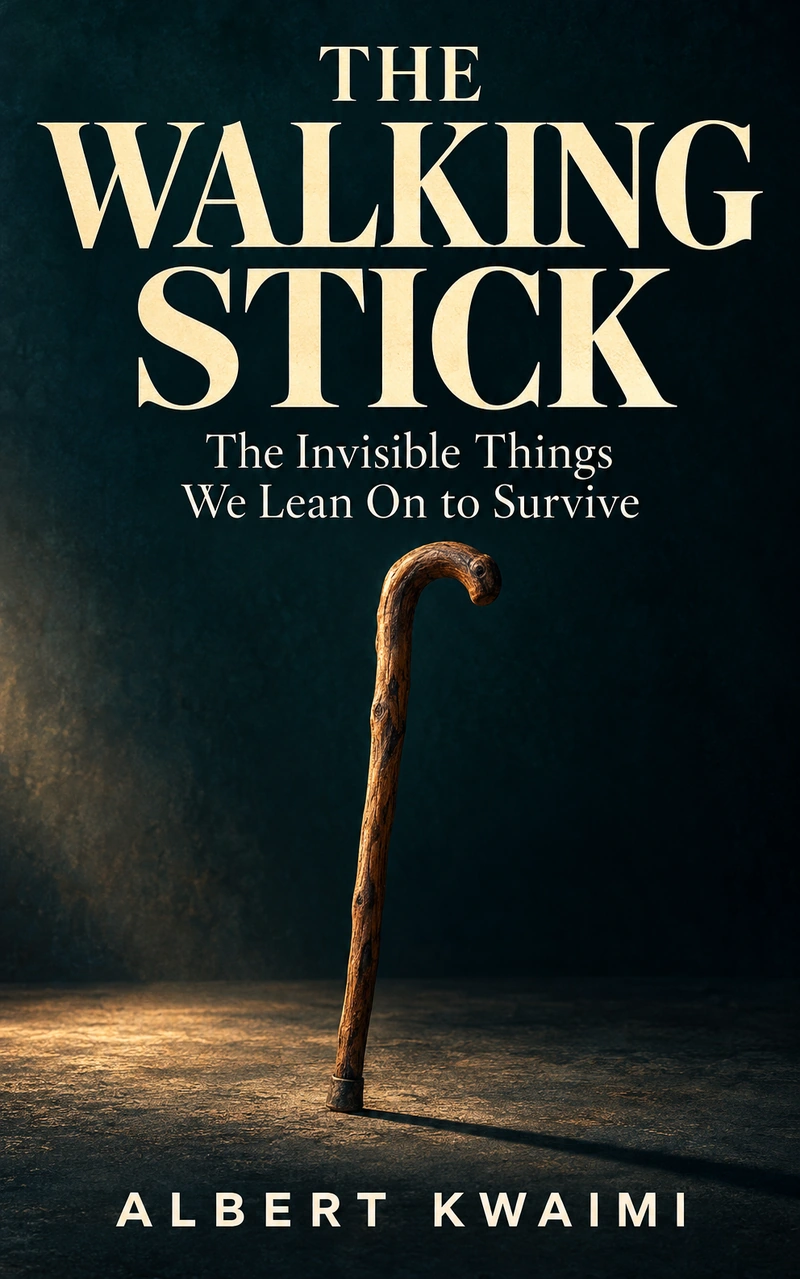
The Invisible Things We Lean On to Survive
You can know that something is hurting you and still feel unable to let it go. Explore the invisible supports behind love, approval, money, anger and control—and build healthier ways to meet your needs without losing yourself.
Checking checkout availability…
Secure payment · PDF download after confirmation
Charged in South African rand (ZAR). No shipping fees.
Prefer print? Opens this book’s paperback edition on Amazon. Payment and delivery are handled there.
For adults who find themselves seeking approval, overgiving, fearing rejection, or using achievement and control to feel secure—and want to understand these patterns with greater honesty.
A complete 119-page PDF for your phone, tablet or computer: ten substantial chapters, reflective exercises, source notes and a thirty-day beginning programme. Educational practical psychology, not individualized therapy.
Read the opening below, or download the 19-page sample containing the introduction and complete first chapter.
You can know that something is hurting you and still feel unable to loosen your grip on it.
That is one of the most difficult experiences to explain, especially to yourself. You recognise the relationship that keeps costing you your peace. You hear yourself agreeing when you wanted to say no. You achieve what you once thought would make you feel secure, only to discover that you need another achievement before you can rest.
Understanding the cost has not yet given you the freedom to choose differently. When this happens, it is worth asking a question that goes deeper than “Why do I keep doing this?” Ask: “What am I afraid I would have to feel, face, or believe about myself if I stopped?”
We usually recognise dependence by what a person keeps reaching for. But to understand it, we must also examine what they are reaching away from. A request for reassurance may carry a fear of being unwanted. Constant helping may protect a person from wondering whether anyone would choose their company without needing their service. The determination to win every disagreement may conceal difficulty accepting that being mistaken does not make someone insignificant.
These are possibilities to investigate, not explanations to impose. The same behaviour can arise for different reasons. But once you begin asking what a habit is protecting you from, a pattern that seemed senseless may become understandable. And what you can describe accurately becomes easier to address deliberately.
I call these psychological supports our walking sticks: the things we lean on to steady ourselves, preserve an identity, or get through feelings we do not yet know how to manage another way. The metaphor becomes especially useful when a support starts limiting the life it was meant to help us live.
A walking stick can be a relationship. It can be money, admiration, anger, control, or the conviction that your past has already decided your future. Sometimes it is a role that other people praise. Being the reliable one can become a life in which you are never allowed to need anything. Being the successful one can make an ordinary setback feel like the loss of your right to be respected.
The danger is easy to miss because the thing itself may be valuable. Love matters. Financial security matters. Achievement can be deeply satisfying. Faith, friendship, family, and community can sustain us through experiences we could not reasonably bear alone. The question is what happens when one of these becomes responsible for holding together your entire sense of who you are.
What happens when the thing holding you up becomes the very thing preventing you from standing?
A restrictive dependence rarely presents you with a single bill. Its cost is spread across ordinary days. You avoid a necessary conversation. You spend money to maintain an impression. You agree to a commitment and resent it before you have finished saying yes. You postpone a decision because somebody might disapprove.
Loading reader reviews…
Reviews come from confirmed buyers. Ratings include published reviews from purchases that have not been refunded. All ratings are welcome; reviews are checked for spam, abuse and private information.
Already have this book? Write a review on your purchase confirmation page, or retrieve your book using your receipt.
PDF ebookCare deeply without offering unlimited access.
 PDF ebook
Prepare for the ordinary week, not only the special day.
 PDF ebook
Stop guessing what a connection means. Start asking clearer questions.